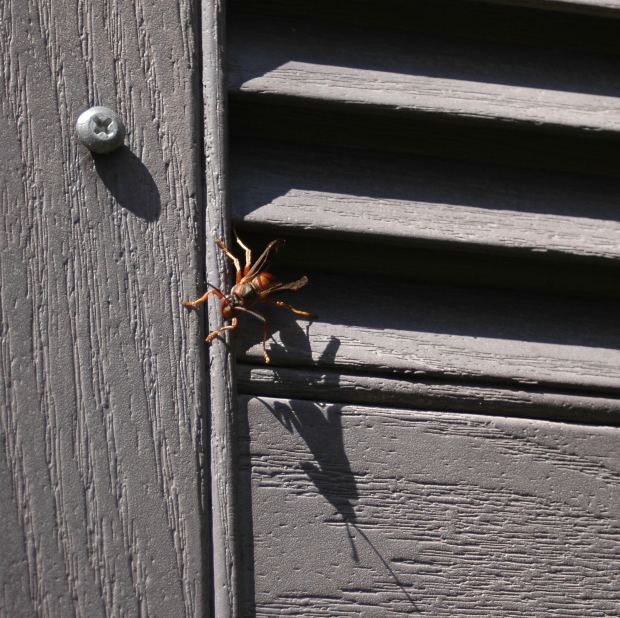
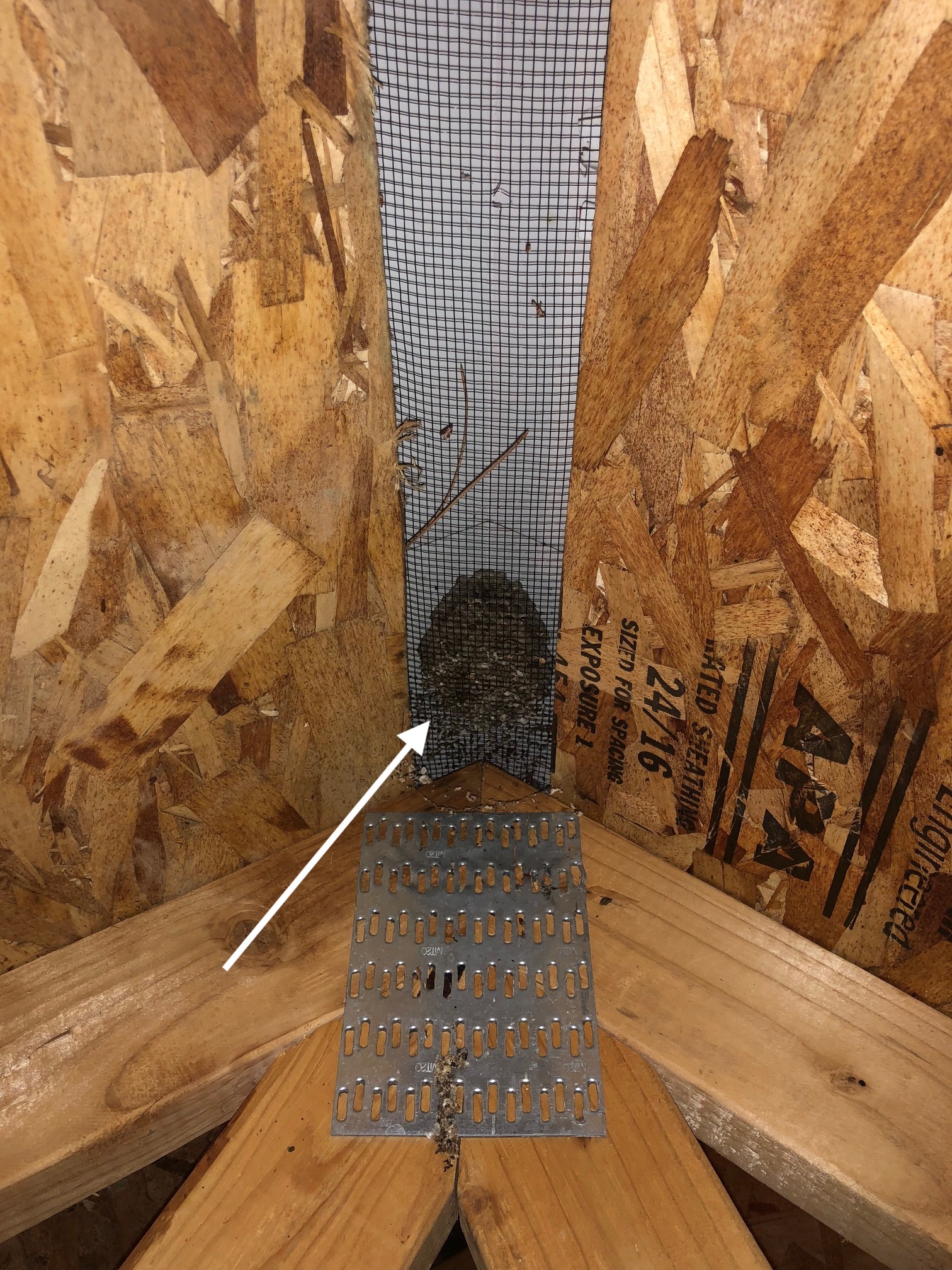
Check your attic for openings that the wasps could be using to get into the vents.
Wasp nest in attic vent.
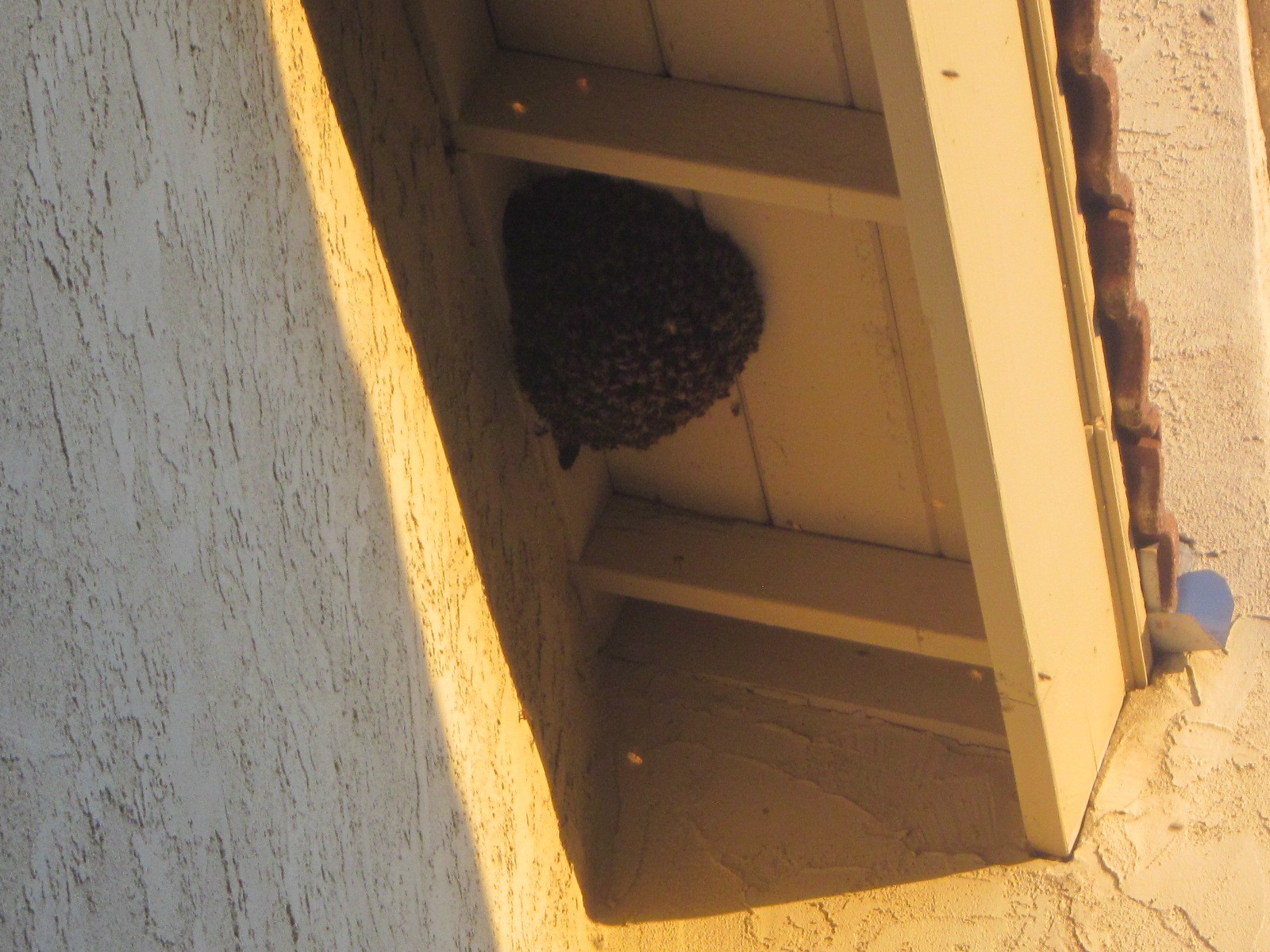
It is very easy for wasps to get into attics normally due to openings around vents and or poor construction practices that leave big gaps between the sections of wood near the areas where the shingles and gutters meet up.
If the nest is a hanging nest make sure you purchase a spray with a projectile shot so that you can completely cover the nest with it.
Although the wasps are entering the air brick vent the nest may be up to 6 feet away under a building or it may be directly behind or to the side of the air brick ie.
Rats mice squirrels and raccoons aren t the only pests known to seek refuge in the dark confines of an attic.
Famco sells a j vent with a 1 8 inch screen but wasps might be able to get thru that if they really wanted to.
In a cavity wall.
Spray the nest according to the directions on your spray.
If in a vent above ground level be sure to check that the vent does not serve an internal room of the house or your insecticidal wasp killer powder may enter the internal room when blown into the vent from outside.
Another very common place to find wasps nesting is in attic spaces.
The problem may initially seem minor with just a couple stray wasps but their numbers can quickly spiral out of control as the queen lays her eggs without the threat of natural predators.
If your wasps have built a nest on the floor of your attic bomb style wasp poisons work very well.
Unlike a wasp a honeybee hives consist of many thousands of bees within just a few days a brand new colony may have a several sheets of honeycomb near or inside the vent or air duct.
Breaks in the insulation or small holes in the wood are common sources for wasp entry.
Any breaches require sealing to prevent more wasps from entering.
Wasps frequently build nests and thrive here as well.
Wear long sleeved shirts and long pants to help protect against stings.